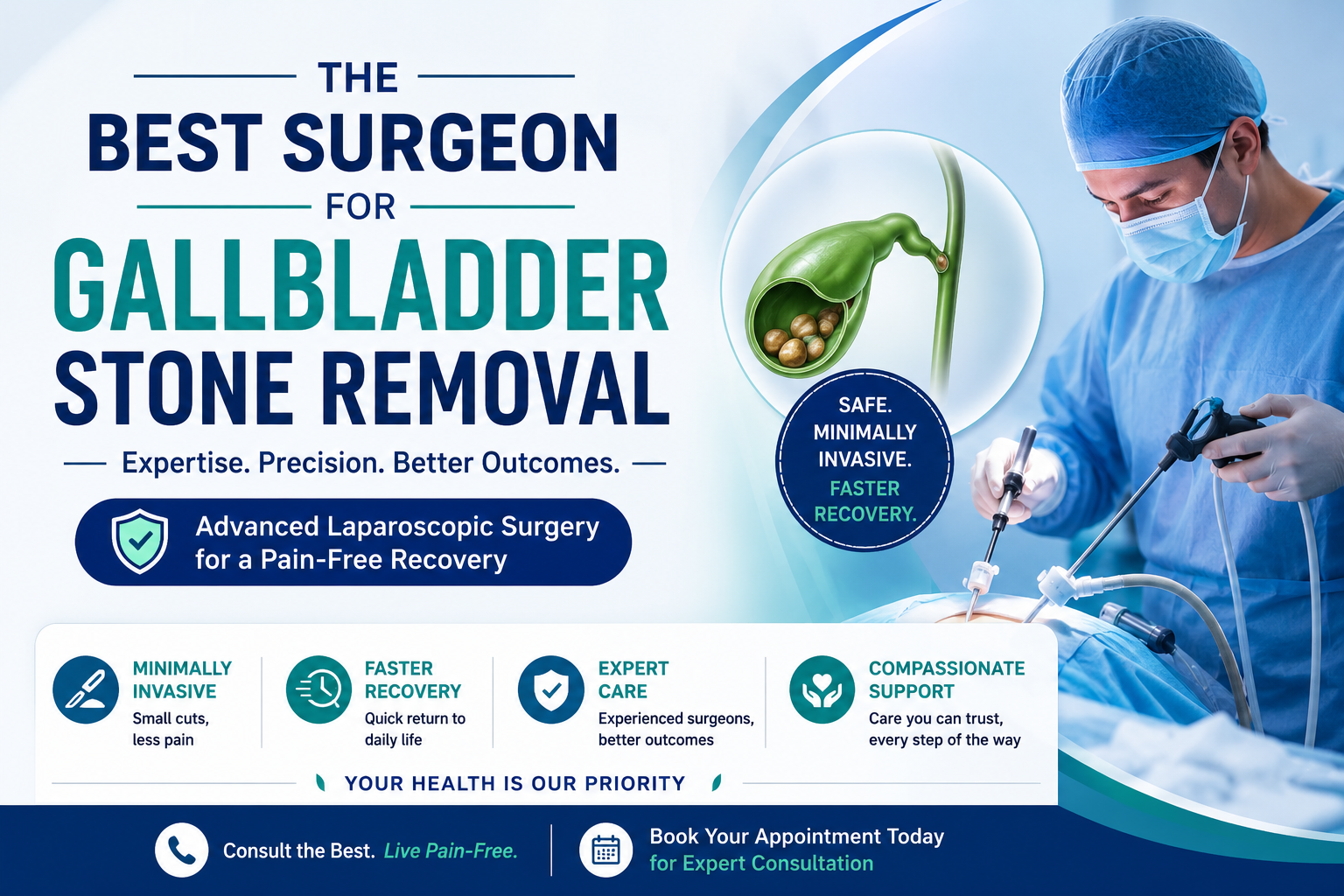
Gallbladder stones (cholelithiasis) are one of the most common digestive issues worldwide. While some stones remain silent, others can cause sudden, excruciating pain in the upper right abdomen, accompanied by nausea, vomiting, or even jaundice. When dietary changes are no longer enough, surgical intervention becomes necessary.
If you or a loved one is dealing with recurrent gallbladder pain, finding the best surgeon for gallbladder stone removal is the most crucial step toward permanent relief. This comprehensive, SEO-friendly guide breaks down what to look for in a top specialist, the advanced surgical techniques available today, and how to make an informed choice.
Understanding the Standard Treatment: Cholecystectomy
It is a common misconception that surgeons simply “pop out” the stones and leave the gallbladder behind. Because the gallbladder itself is prone to forming more stones, the medical gold standard is a cholecystectomy—the complete and safe removal of the gallbladder.
Your body does not need a gallbladder to survive; the liver will simply redirect bile straight into the small intestine to digest food.
Key Qualifications to Look for in a Gallbladder Surgeon
When searching for the right specialist, you want to look for specific credentials that guarantee safe, precise, and highly competent care.
1. General & Laparoscopic Surgeon
Your primary target should be a General Surgeon who specializes in advanced laparoscopic (keyhole) surgery. Look for post-graduate degrees and fellowships such as:
- MS (Master of Surgery) or DNB (Diplomate of National Board) in General Surgery.
- FMAS / DMAS (Fellowship/Diploma in Minimal Access Surgery).
- FIAGES (Fellow of Indian Association of Gastro-intestinal Endosurgeons).
2. High Volume of Procedures
The best gallbladder surgeon is someone who performs cholecystectomies on a regular, high-volume basis. Surgeons with a high volume of cases have a deeply refined spatial awareness of the biliary anatomy, which drastically minimizes the risk of rare complications like bile duct injuries.
3. Patient-First Approach
A stellar surgeon does not just rush you into the operating room. They will take the time (20–30 minutes) to look at your ultrasound or CT scans, explain the state of your gallbladder (whether it is acutely inflamed, packed with multiple stones, or showing signs of wall thickening), and outline the recovery timeline clearly.
Advanced Surgical Techniques: Laparoscopic vs. Open Surgery
Today’s top surgeons heavily favor minimal access techniques because they yield better cosmetic results and drastically faster recovery times.
| Feature | Laparoscopic Cholecystectomy (Keyhole) | Open Cholecystectomy (Traditional) |
| Incision Size | 3 to 4 tiny incisions (5–10 mm each) | One single large incision (4–6 inches) |
| Hospital Stay | Usually 24 to 48 hours (often day-care) | 3 to 5 days |
| Recovery Window | Back to normal light activity in 1 week | 4 to 6 weeks of strict rest |
| Post-Op Pain | Minimal, managed with mild analgesics | Moderate to high |
| When it is used | Preferred default method for 95%+ of cases | Reserved for severe scarring, active ruptures, or complex anatomy |
Checklist to Choose the Best Surgeon Near You
To narrow down your search and find a trusted local expert, keep this four-step checklist in mind:
- Hospital Infrastructure: Ensure the surgeon operates at a multi-specialty facility equipped with an advanced modular operating theater, a fully operational Intensive Care Unit (ICU), and 24/7 diagnostic support.
- Seamless Emergency Response: Gallbladder attacks often strike in the middle of the night. Your chosen surgeon or their hospital panel should have a reliable 24/7 emergency trauma team ready to handle acute cholecystitis (sudden, severe gallbladder inflammation).
- Patient Reviews and Transparency: Look for consistent local feedback regarding the surgeon’s transparency. A great doctor provides clear financial breakdowns upfront and explains exactly what to expect post-surgery.
- Cashless and Insurance Support: Check whether the surgeon’s affiliated hospital is empaneled with major health insurances or government healthcare schemes (like Ayushman Bharat) to minimize out-of-pocket expenses.
Medical Note: If you experience severe abdominal pain accompanied by a high fever, chills, or yellowing of the eyes and skin (jaundice), do not wait for a scheduled OPD appointment. These are signs of a blocked bile duct or active infection that requires immediate emergency evaluation.
By choosing an experienced minimal access surgeon who prioritizes advanced laparoscopic techniques, you can look forward to a quick, virtually painless recovery and a smooth return to a life free of digestive pain. Always book an initial consultation to discuss your diagnostic scans and map out the safest path forward.